


Today, I’m going to share how you can cut through the noise and pick the three best books for mastering annual report analysis.
Whether you’re an investor, entrepreneur, or simply managing your own finances, if you choose wisely, these books will save you years of wasted effort, teach you to spot the stories buried in the numbers, and empower better financial decisions.
Most people wade through stacks of annual reports or endless “expert” commentary, only to realise most books are filled with filler content or confusing jargon. The wrong approach leaves you frustrated and none the wiser.
Analysing annual reports isn’t about memorising ratios or accounting standards—it’s about interpreting the hidden forces shaping companies.
Key takeaways you’ll get from these books:
A step-by-step investor’s lens for understanding financial statements.
Practical frameworks and checklists for dissecting reports quickly and accurately.
Proven tactics to spot creative accounting and avoid red flags.
The 3 Books every wannabe Investor, Entrepreneur should read
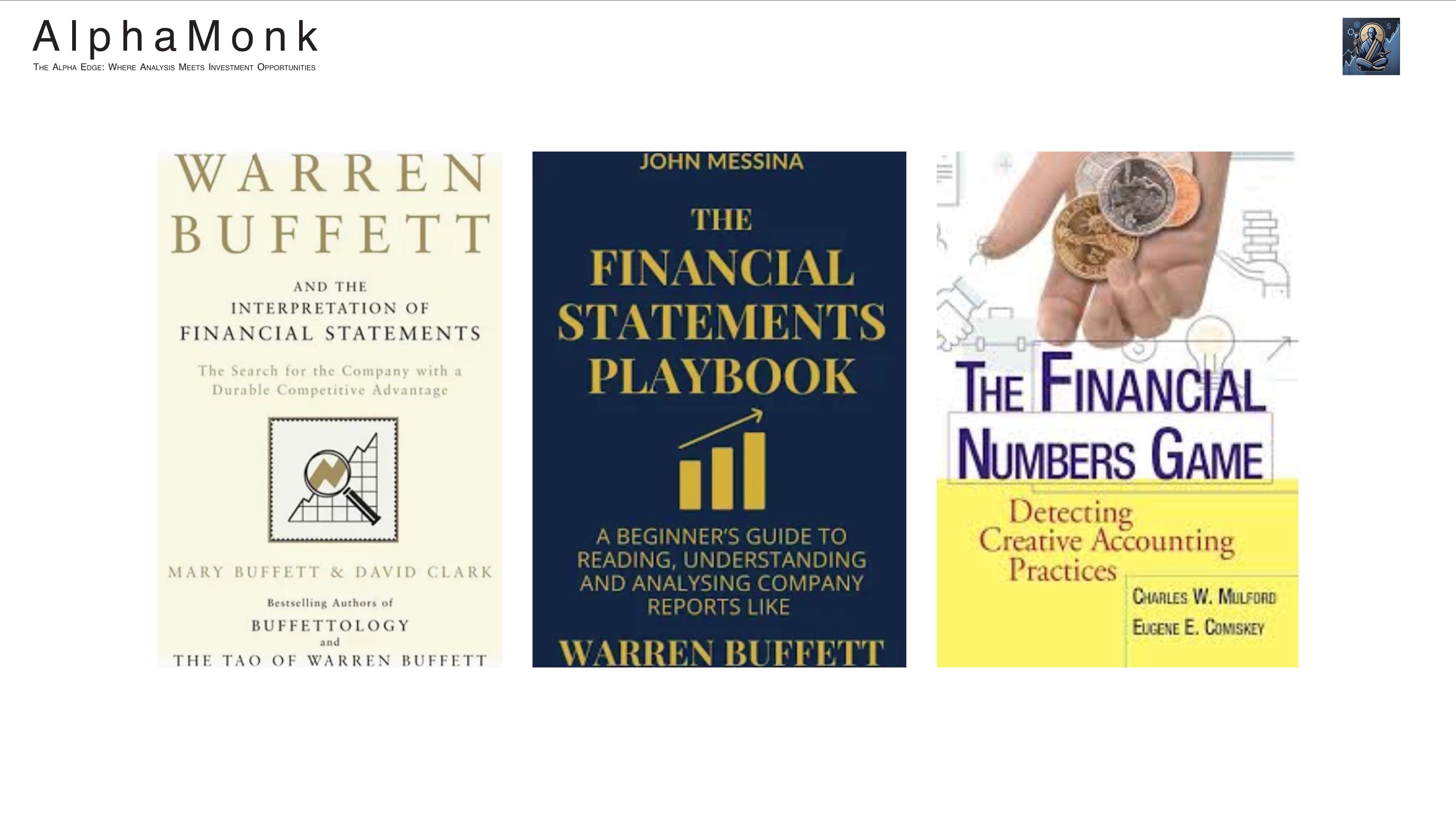
Book #1: Warren Buffett and The Interpretation of Financial Statements – Mary Buffett
Recommended by Brian Feroldi I first read this book in 2021 and keep referring it almost every time I read an annual report.

And here’s why you’ll love it:
Mary Buffett distils the approach of Warren Buffett himself, linking every section of financial statements to what actually matters for value investing. It’s concise, practical, and readable even for beginners. You’ll walk away knowing exactly what numbers seasoned investors focus on, without the fluff.
Book #2: The Financial Statements Playbook – John Messina
This book was recommended to me by my accountant, who is also my sparring partner to debate investment opportunities.
Here’s why I think you’ll love it:
John Messina brings together practical examples and simple explanations. The Playbook isn’t just theory; it offers clear checklists and pitfalls to watch for, so you can analyse annual reports efficiently and avoid common mistakes. It’s an excellent bridge from textbook knowledge to real-world analysis.
Book #3: The Financial Accounts Game – Detecting Creative Accounting Practices – Mulford and Comiskey
Finally, I think everyone should read this book. I picked this recommendation from @Invest_Books

And here’s why I think you’ll love it:
Mulford and Comiskey offer a crash course in detecting accounting tricks buried in annual reports. The book is packed with real-life case studies and smart tips to spot red flags. If you want to protect yourself from misleading numbers, this is essential reading.
Action Steps
Pick one of these books and read a chapter a week, taking notes on key concepts or red flags.
Apply one analysis framework from each book to a real company’s annual report (start with one you already invest in or follow).
Create your own checklist of insights and warning signs, based on what you learn—refer to it when reviewing any future reports.
Teach a friend or explain what you’ve learned from each book. This will deepen your understanding and reveal any gaps.
So finally, learning to read annual reports doesn’t have to be a marathon or a math whiz! Just dive into these three awesome books, and you’ll develop some serious analytical skills, dodge those common traps, and start seeing the big picture turning numbers into real-world financial gold!