

Web 3 and Coinbase
Short Dive: What is Web 3? and Why Coinbase could lead the revolution?

Imagine if Facebook didn't own your photos, if Google didn't control your search history, and if you could truly own digital items the same way you own physical possessions. This is the promise of Web3 - a revolutionary vision for a new internet that could fundamentally change how we interact online. But what exactly is Web3, and why is everyone from Silicon Valley venture capitalists to cryptocurrency enthusiasts talking about it
Understanding the Internet's Evolution:
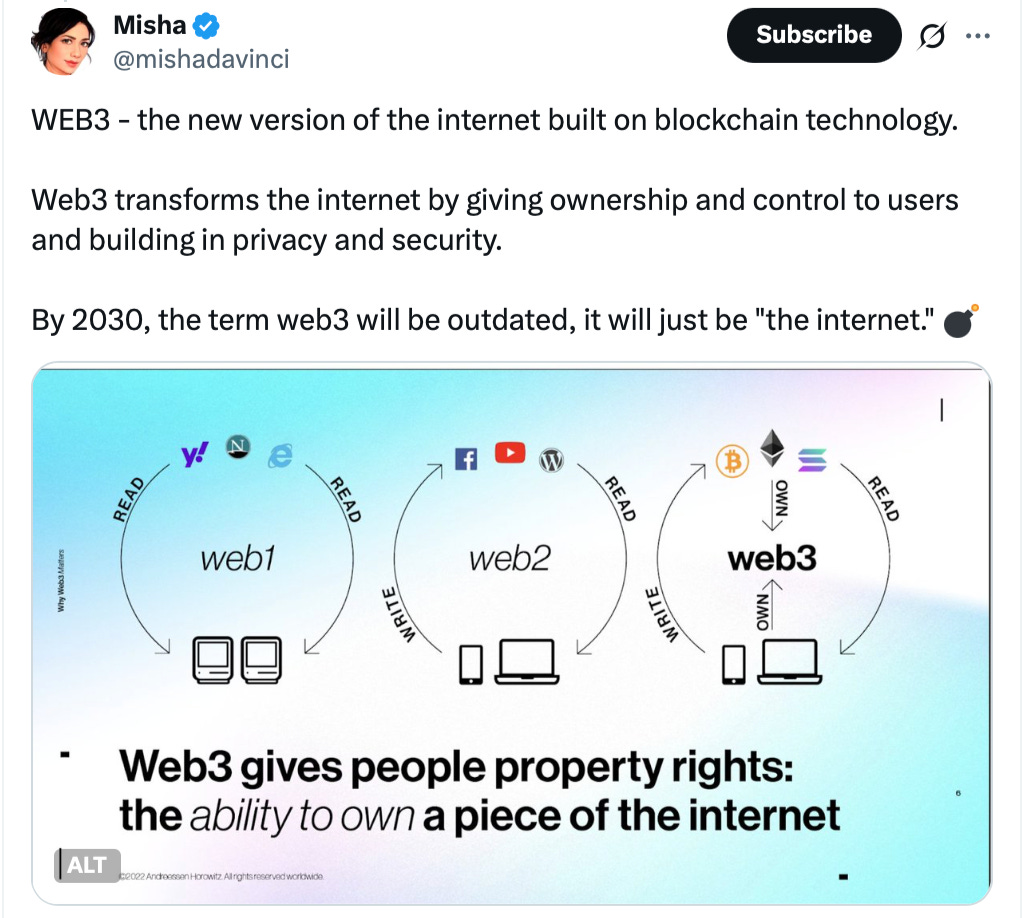
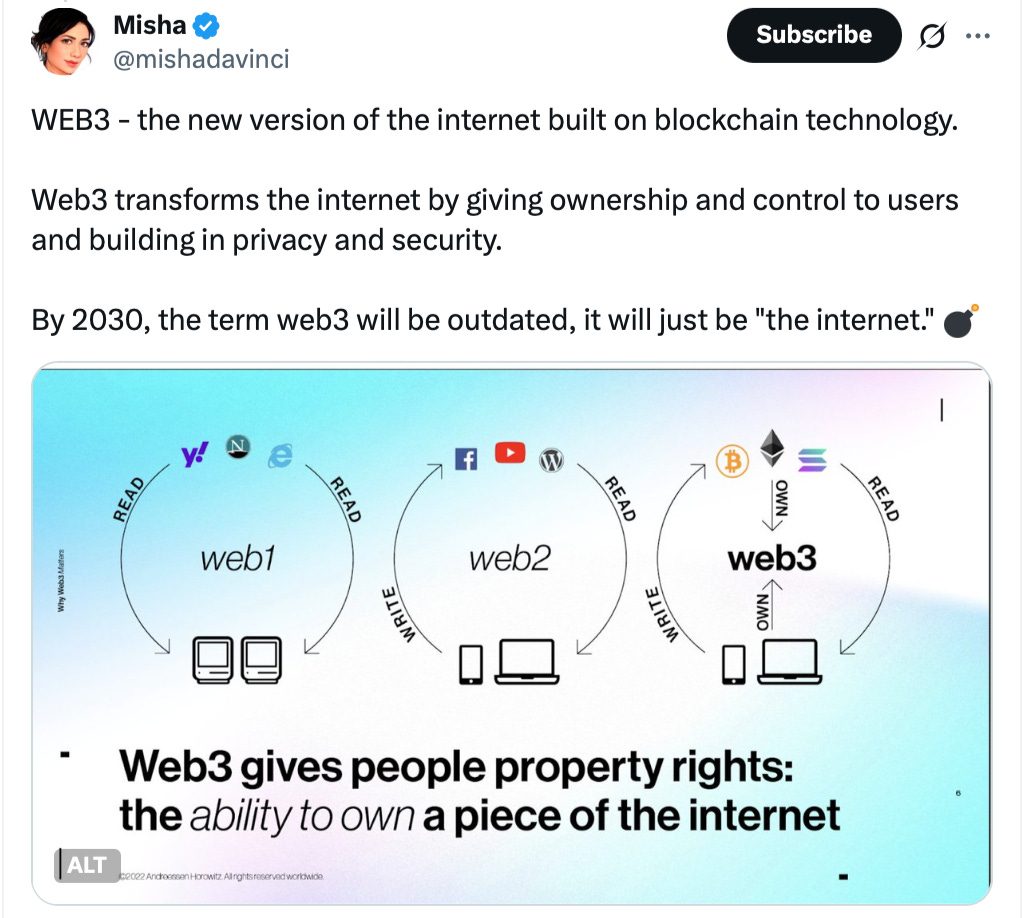
To grasp Web3, we need to understand how the internet has evolved. Web1, which emerged in the 1990s, was the "read-only" internet. Websites were static pages that users could view but not interact with - think of early Yahoo directories or personal homepages. It was like a massive digital library where you could browse but not contribute.
Web2, which began around 2004, transformed the internet into the "read-write" platform we know today. Social media platforms like Facebook, user-generated content sites like YouTube, and collaborative tools like Google Docs allowed users to create and share content easily. However, this came with a catch: whilst users created the content, tech giants owned the platforms, controlled the data, and reaped the profits. You might post photos on Instagram, but Meta owns Instagram and can change its rules, monetise your content, or even delete your account at will.
Web3 proposes a "read-write-own" internet. Instead of platforms owning user data and content, blockchain technology enables users to have true ownership and control. It's a vision where the internet becomes more like the physical world - when you buy something, you actually own it, and when you create something, you control it.
https://x.com/mishadavinci/status/1596892590426624000
The Building Blocks of Web3: At its foundation, Web3 relies on several key technologies and concepts:
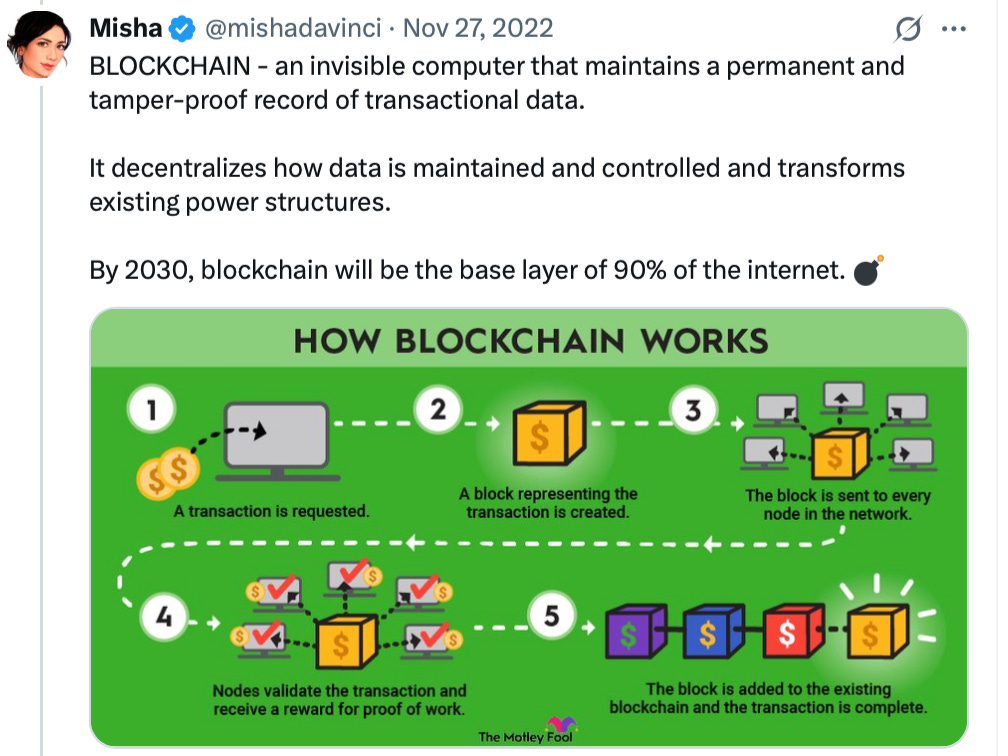
Blockchain Technology: Think of blockchain as a digital ledger that's simultaneously stored on thousands of computers worldwide. Unlike traditional databases controlled by single companies, blockchains are decentralised - no single entity controls them. Every transaction is recorded permanently and transparently, creating an immutable history that anyone can verify but no one can alter unilaterally.
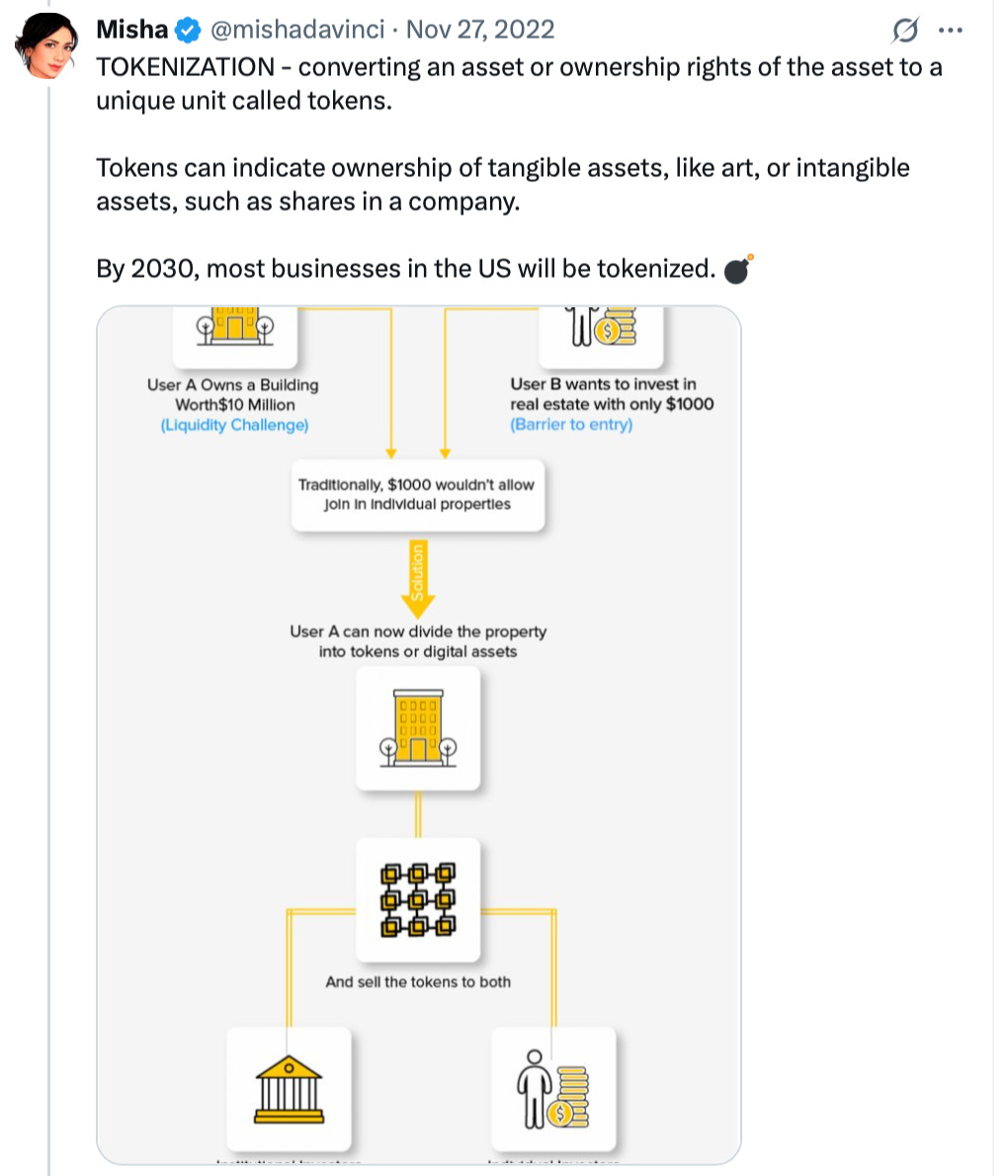
https://x.com/mishadavinci/status/1596892464790396928 Cryptocurrencies and Tokens: These digital currencies aren't just about speculation or investment. In Web3, they serve as the economic infrastructure, enabling peer-to-peer transactions without banks or payment processors. Tokens can represent ownership, voting rights, or access to services, creating new ways to align incentives between platforms and users.
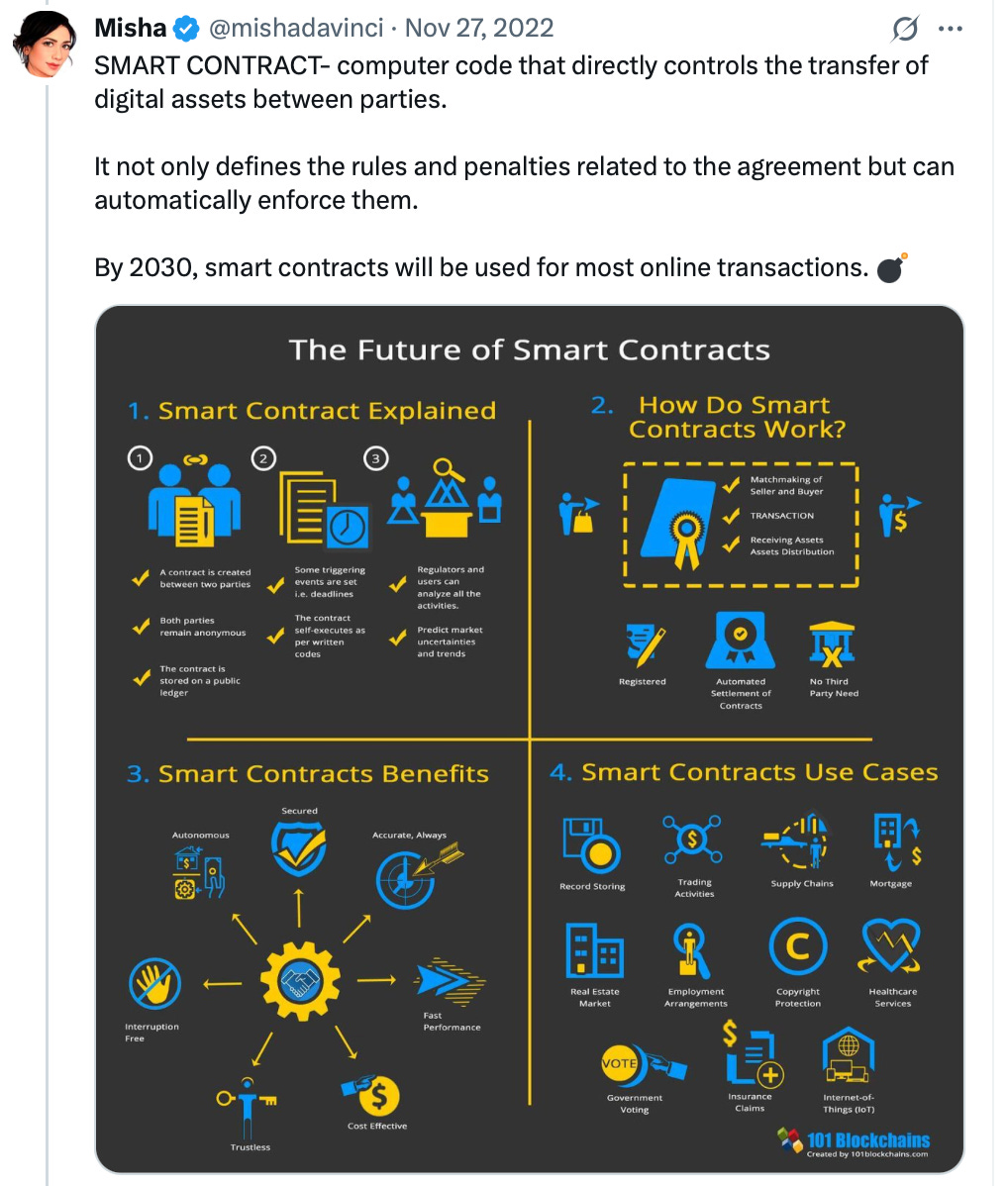
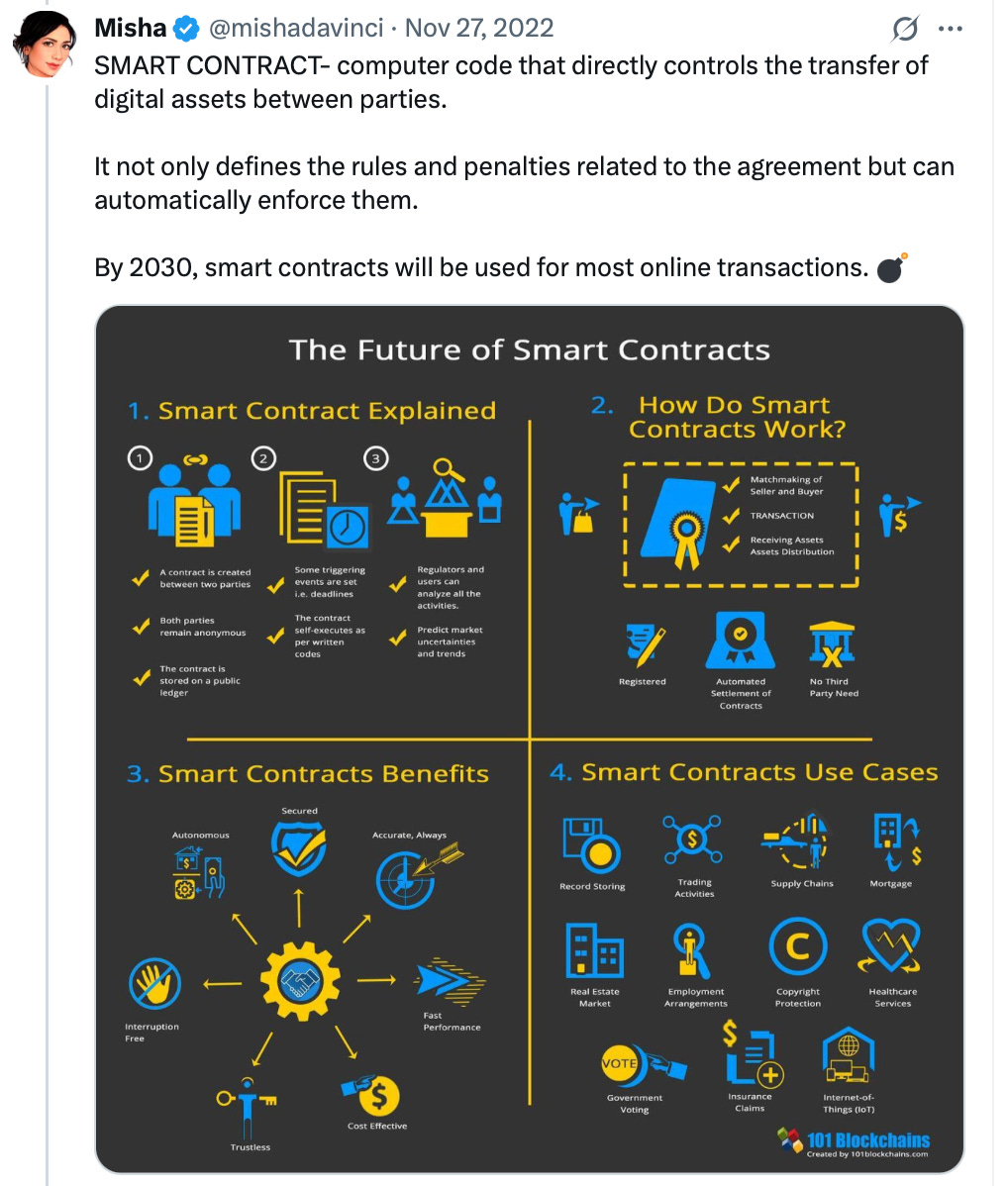
https://x.com/mishadavinci/status/1596892566472957954 Smart Contracts: These are self-executing agreements written in code. Imagine a vending machine - you insert money, select a product, and receive it automatically without human intervention. Smart contracts work similarly but for complex digital agreements, automatically executing when predetermined conditions are met.
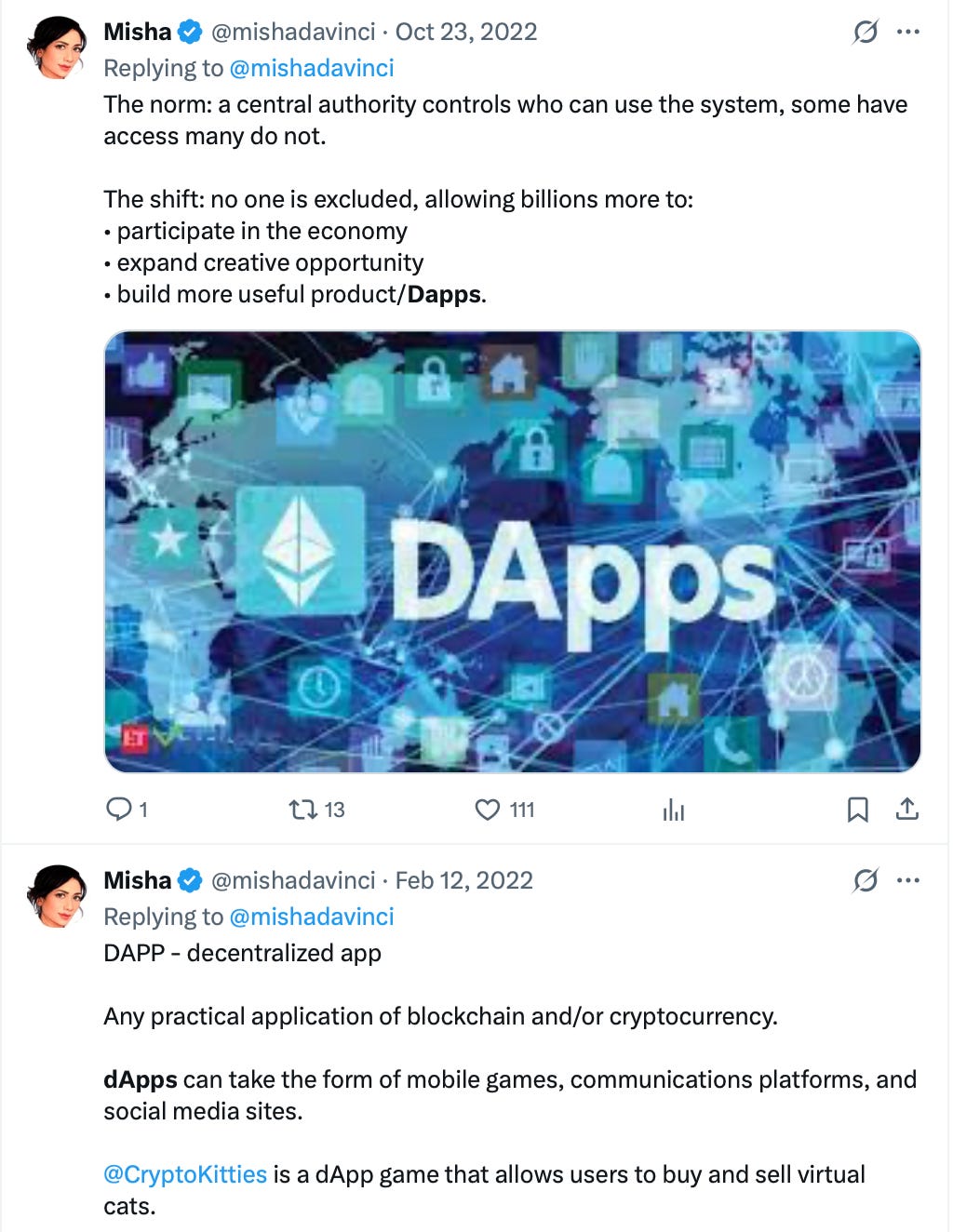
https://x.com/mishadavinci/status/1596892552350748672 Decentralised Applications (dApps): Unlike traditional apps that run on company servers, dApps operate on blockchain networks. No single company controls them, and they can't be shut down unilaterally. Think of them as community-owned applications where users have a say in how they evolve.
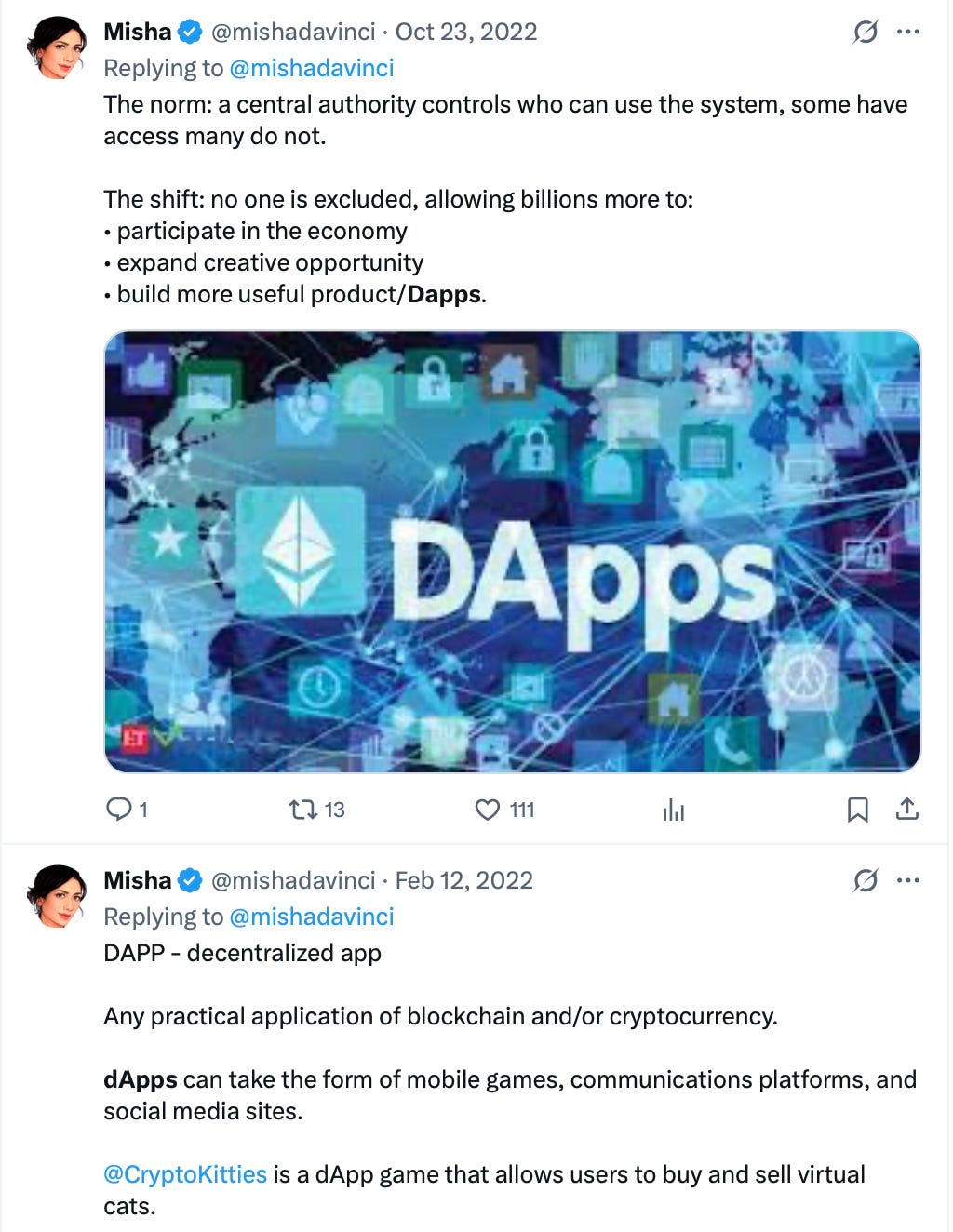
https://x.com/mishadavinci/status/1584195870051794944 The Promise of Web3: Web3's appeal lies in its potential to solve many of Web2's problems:
True Digital Ownership: In Web3, when you buy a digital asset - whether it's art, music, or virtual real estate - you genuinely own it through NFTs (Non-Fungible Tokens). You can sell it, transfer it, or use it across different platforms without permission from any company.
Privacy and Control: Your data belongs to you. Instead of companies harvesting your information for targeted advertising, you decide what to share and with whom. Your online identity becomes portable - you can take your profile, followers, and content across different platforms.
Financial Inclusion: Web3 enables anyone with internet access to participate in the global economy. Without traditional banking barriers, people in developing countries can access financial services, earn income, and build wealth through decentralised finance (DeFi) platforms.
Creator Economy: Artists, musicians, and content creators can monetise their work directly, without intermediaries taking large cuts. Smart contracts can automatically distribute royalties, and creators can maintain ongoing relationships with their audiences through token economies.
Real-World Applications: Web3 isn't just theoretical - it's already being implemented:
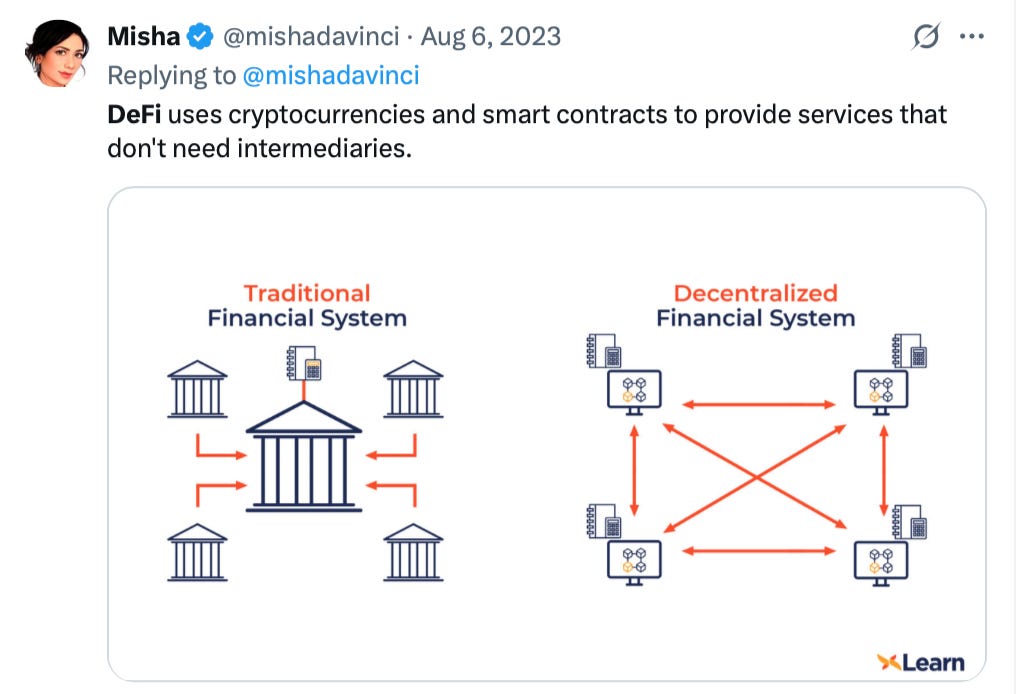
DeFi (Decentralised Finance): Platforms like Uniswap and Aave allow users to trade, lend, and borrow without banks. These services operate 24/7, offer competitive rates, and don't discriminate based on geography or credit history.
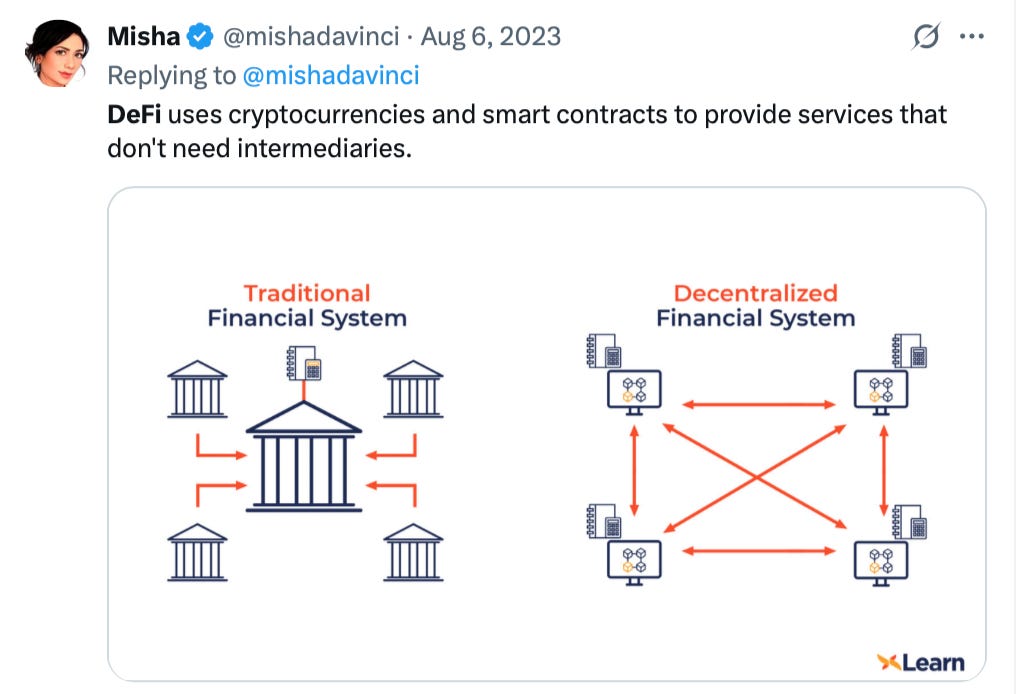
https://x.com/mishadavinci/status/1688210427224965120 NFT Marketplaces: Sites like OpenSea enable trading of digital art, collectibles, and virtual goods. Musicians release albums as NFTs, artists sell directly to collectors, and games allow players to truly own in-game items.
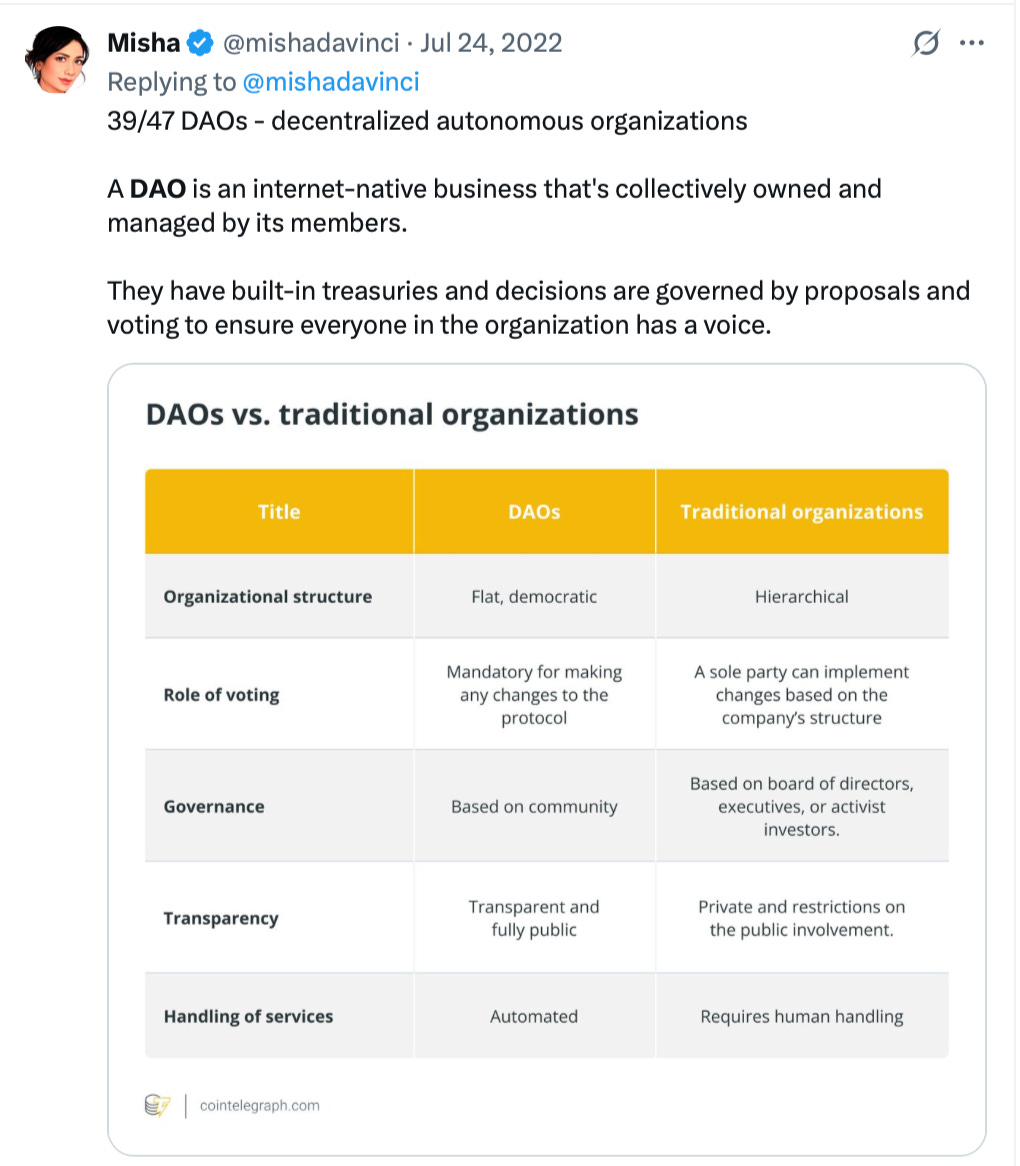
DAOs (Decentralised Autonomous Organisations): These are internet-native organisations governed by token holders rather than traditional corporate structures. Members vote on proposals, allocate resources, and share in the organisation's success.
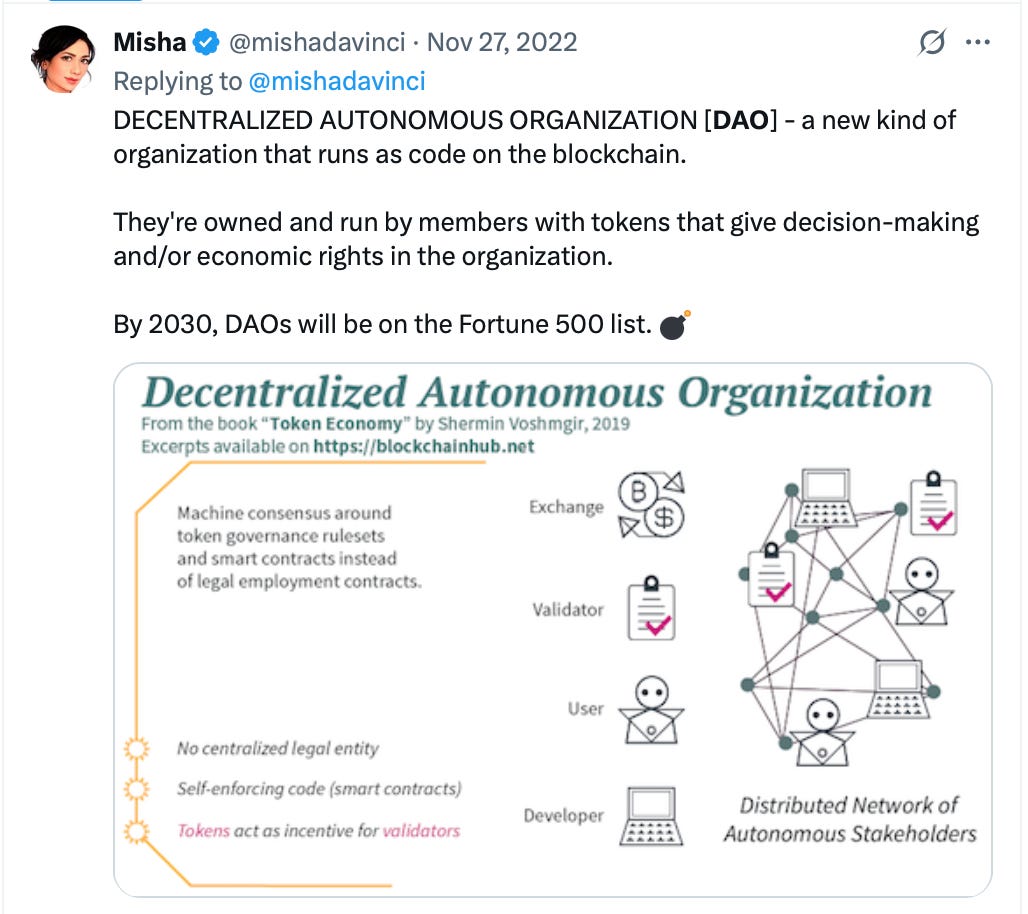
https://x.com/mishadavinci/status/1596892502266507265 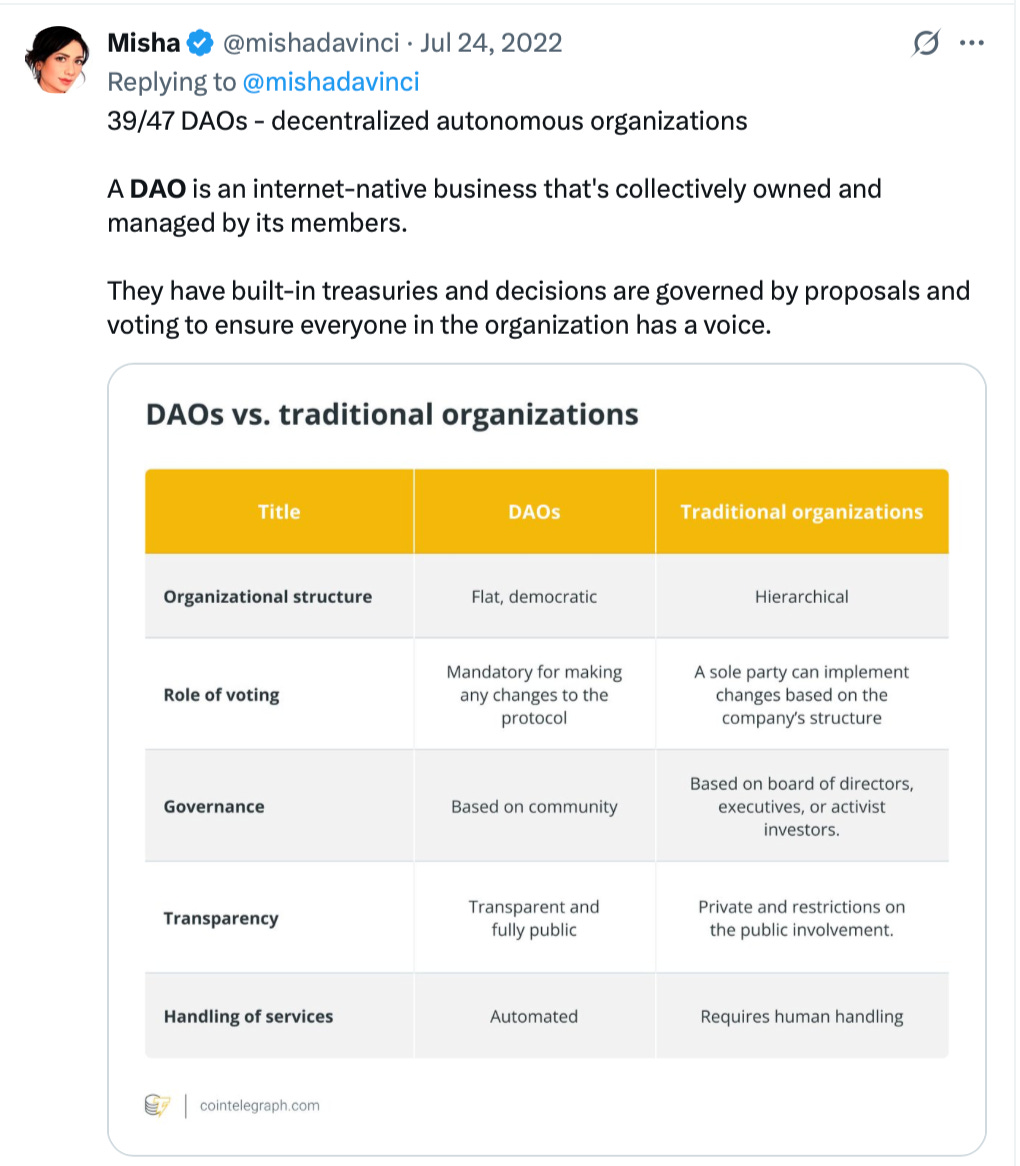
https://x.com/mishadavinci/status/1551212047546736640 Play-to-Earn Gaming: Games like Axie Infinity allow players to earn real money by playing, owning game assets, and participating in virtual economies.
Coinbase's Web3 Ambitions
Enter Coinbase, the American cryptocurrency exchange that's positioning itself as a gateway to Web3. Founded in 2012, Coinbase built its reputation as a user-friendly platform for buying and selling cryptocurrencies. Now, it's eyeing a much larger opportunity: becoming the primary infrastructure provider for the Web3 ecosystem.
Coinbase's advantages are substantial. The company has spent years building robust infrastructure for cryptocurrency trading and storage, earning trust from both retail investors and institutions. Their regulatory compliance gives them credibility in a space often associated with scams and volatility. With over 100 million verified users, they have a massive audience ready to explore Web3 applications.
The company has also invested heavily in Web3 development tools. Coinbase Cloud provides infrastructure for developers building decentralised applications, whilst their venture arm backs promising Web3 projects. They've launched NFT marketplaces, integrated DeFi protocols, and created educational resources to help users understand Web3 concepts.
The Challenges Ahead
However, Coinbase's path to Web3 leadership faces significant obstacles. The most fundamental challenge is philosophical: how can a centralised company lead a decentralised revolution? Many Web3 purists view centralised exchanges as antithetical to the movement's core values. Coinbase must balance its traditional business model with genuine support for decentralisation.
Competition is fierce. Specialised Web3 platforms like MetaMask, Ethereum, and Polkadot are building infrastructure specifically for decentralised applications. Other exchanges like Binance and FTX (before its collapse) have made similar Web3 plays. Traditional tech giants aren't sitting idle either - Meta's metaverse ambitions and X's blockchain experiments show Big Tech's interest in the space.
Regulatory uncertainty adds another layer of complexity. Governments worldwide are grappling with how to regulate cryptocurrencies, NFTs, and DeFi platforms. Coinbase's compliance-first approach could be an advantage or limitation, depending on how regulations evolve.
Technical challenges persist. Current blockchain technology faces scalability issues - Ethereum, the leading smart contract platform, can process only about 15 transactions per second compared to Visa's 150,000. Gas fees (transaction costs) can be prohibitively expensive during peak times. User experience remains clunky compared to Web2 applications, with complex wallet setups and irreversible transactions deterring mainstream adoption.
The Road Ahead: So, will Coinbase become the leader in Web3? Their success depends on several factors:
First, they must authentically embrace decentralisation whilst leveraging their centralised advantages. This means supporting truly decentralised protocols, open-source development, and user sovereignty, even when it doesn't directly benefit their bottom line.
Second, they need to solve the user experience problem. Web3's complexity remains a barrier for mainstream adoption. Coinbase's expertise in creating user-friendly interfaces could be crucial in bridging this gap.
Third, they must navigate regulatory challenges whilst maintaining innovation. Their compliance expertise could help establish frameworks that protect users without stifling development.
Finally, they need to build genuine community trust. Web3 is as much about culture and values as technology. Coinbase must prove they're committed to the movement's ideals, not just profiting from the trend.
The Web3 Revolution
Web3 represents more than technological evolution - it's a fundamental shift in how we think about digital ownership, online identity, and internet economics. Whether Coinbase leads this revolution or not, the movement towards a more decentralised, user-owned internet seems inevitable.
The implications are profound. Imagine social networks where users own their data and share in platform profits. Picture financial systems accessible to anyone with a smartphone. Envision creative economies where artists connect directly with fans, keeping most of their earnings. This is the Web3 vision - an internet that serves users, not corporations.
For individuals, Web3 offers unprecedented opportunities. Early adopters can participate in governance of platforms they use, invest in projects they believe in, and build careers in entirely new fields. For society, it promises more equitable distribution of internet-generated wealth and power.
The transformation won't happen overnight. Web3 faces technical hurdles, regulatory challenges, and the inertia of existing systems. But as more people experience true digital ownership and decentralised services, the momentum builds. Coinbase, with its resources and reach, could accelerate this transition - if it can balance its corporate identity with Web3's revolutionary spirit.



Ready to dive deeper into the Web3 revolution? Subscribe to discover how blockchain technology is reshaping finance, art, gaming, and social media. Our comprehensive analysis explores the platforms, protocols, and power dynamics that will define the next generation of the internet. Join me as I unpack the opportunities and challenges of this digital transformation.
Read my Coinbase Deep Dive: